Valparaíso, Chile
Summer 2022
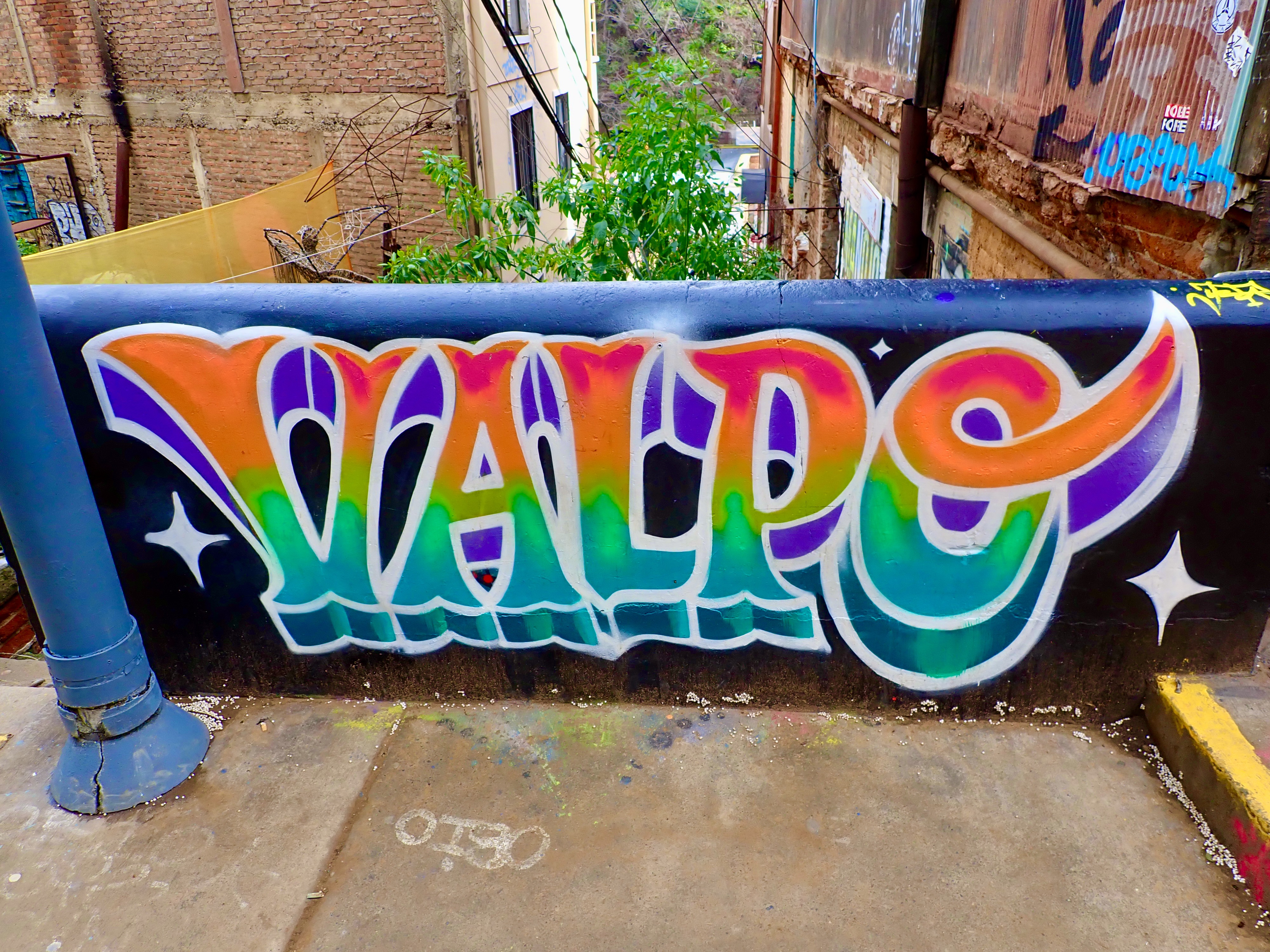
Valparaíso is a city that embraces the concept of getting lost with open arms. Its winding streets and myriad of colourful distractions encourage you to wander without a fixed destination in mind, allowing the city to reveal its hidden treasures in its own time. With each corner turned, a new surprise awaits – be it a masterpiece of street art, a panoramic view of the harbour, or a quaint café tucked away from the busting crowd. In 2003, Valparaíso was designated as a UNESCO World Heritage Site, acknowledging the exceptional architecture and cultural significance of the public art.
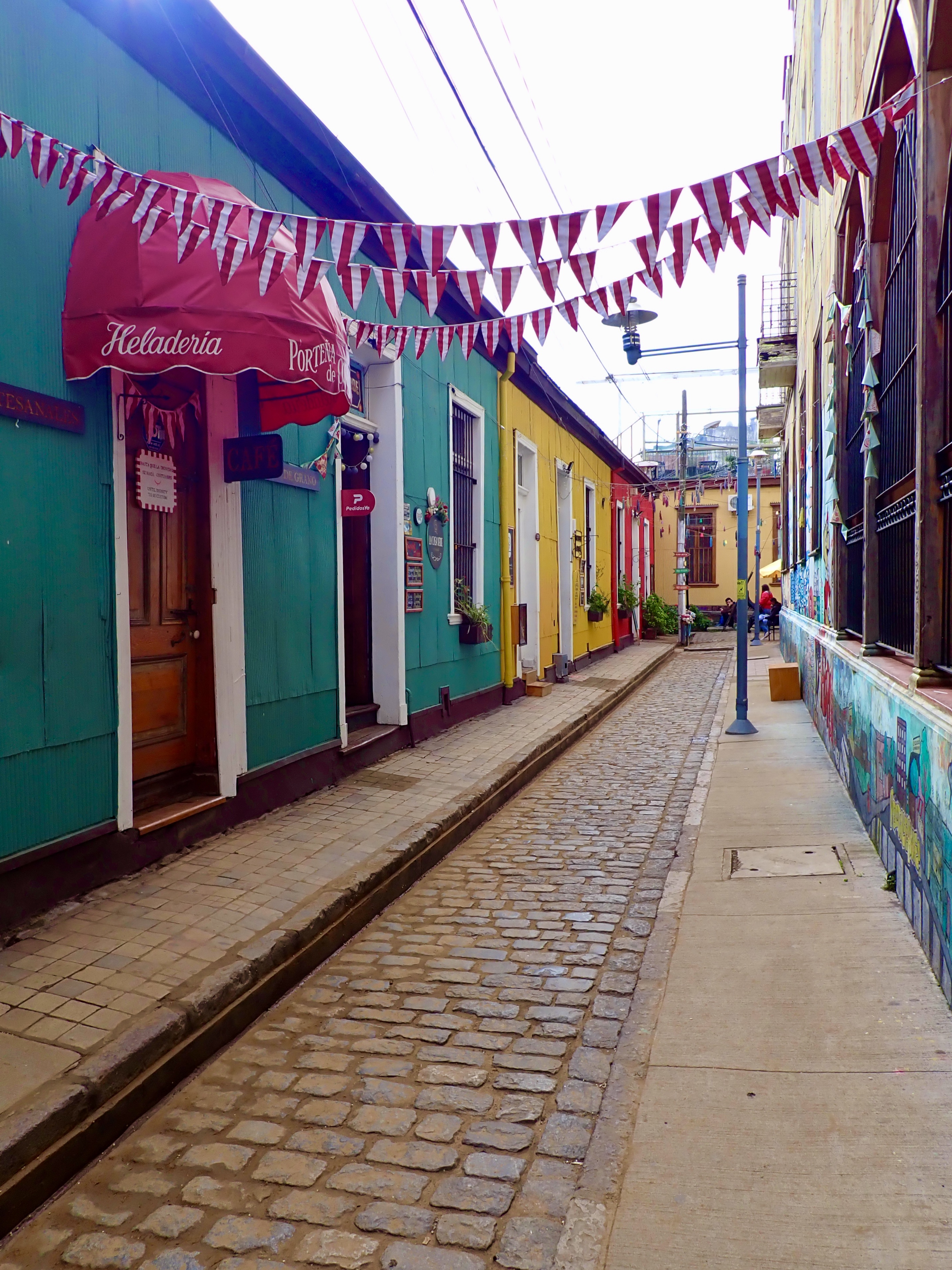
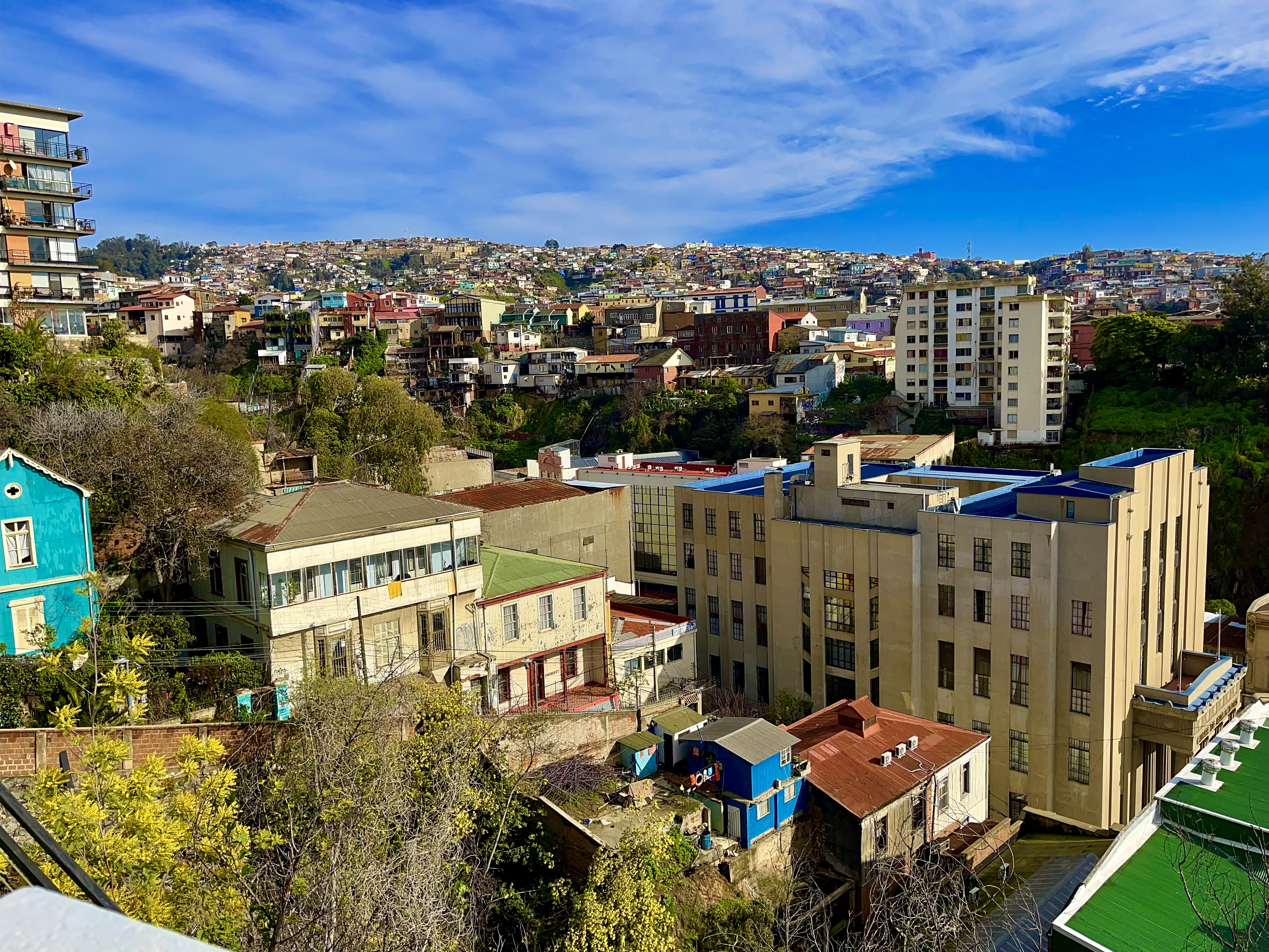
I was picked up at 8am for the roughly 75 min. drive from downtown Santiago by Freddy from Pride Tours for this day trip. I booked online just two days prior and there was no issue given it was low-season – the Chilean winter (June) – but I was still surprised it was just Freddy, me, and our driver for this daylong adventure. As we drove through the mountains and vineyards of the Casablanca Valley, we soon came to Valparaíso, nestled along the stunning Chilean coast, bathed in the winter sun. The city beckons from a distance with its enchanting blend of vibrant culture and breathtaking scenery. This coastal gem is renowned for its kaleidoscope of colorful houses that cascade down hillsides, creating an artistic canvas that is as charming as it is picturesque.
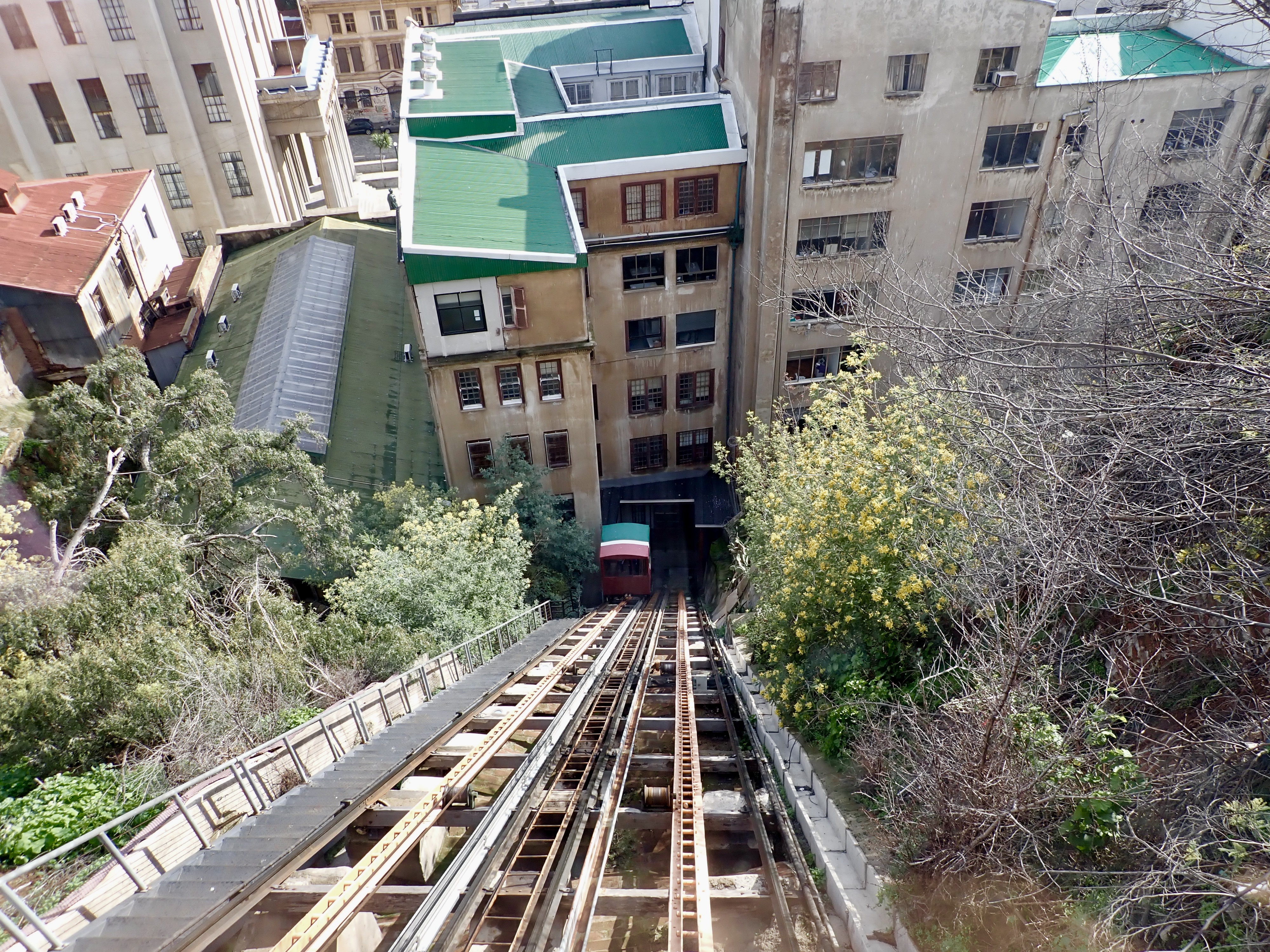
We left the van and driver near the port and wandered around Plaza Sotomayor, home to the building that houses the headquarters of the Chilean navy and one that houses the National Council of Culture and Arts. The quiet Plaza is anchored by a monument honouring Chilean sailors who died during the War of the Pacific in the late 1800s. And then we were off – not right or left or straight ahead – but upward! Valparaíso is a city of hills, winding streets, and corridors of stairs, and is home to 16 funiculars! Most were built in the early 1900s and while only 7 are active today, the others are undergoing restoration to bring them up-to-date and back to service. Our journey on the El Peral funicular took us up 39m (128ft) from the nearby Plaza Sotomayor, depositing us at Paseo Yugoslavo.
It is here when you walk out onto the street from the funicular station that the vibrancy of Valparaíso hits you – the art spills out everywhere, with colourful murals that breathe life into what once must have been dark and narrow alleys and streets. The murals transform the city into an open-air art exhibit. But the street art also goes beyond its aesthetics – it embodies the city’s political and social issues. These murals serve as a platform for public discourse, giving voice to diverse political perspectives, social commentaries, and cultural narratives. Stemming from a history of activism and social movements in the city, these artworks depict historical events, figures of significance, and pressing societal issues, asking the resident and the visitor to engage with what they convey, from human rights issues to environmental concerns.
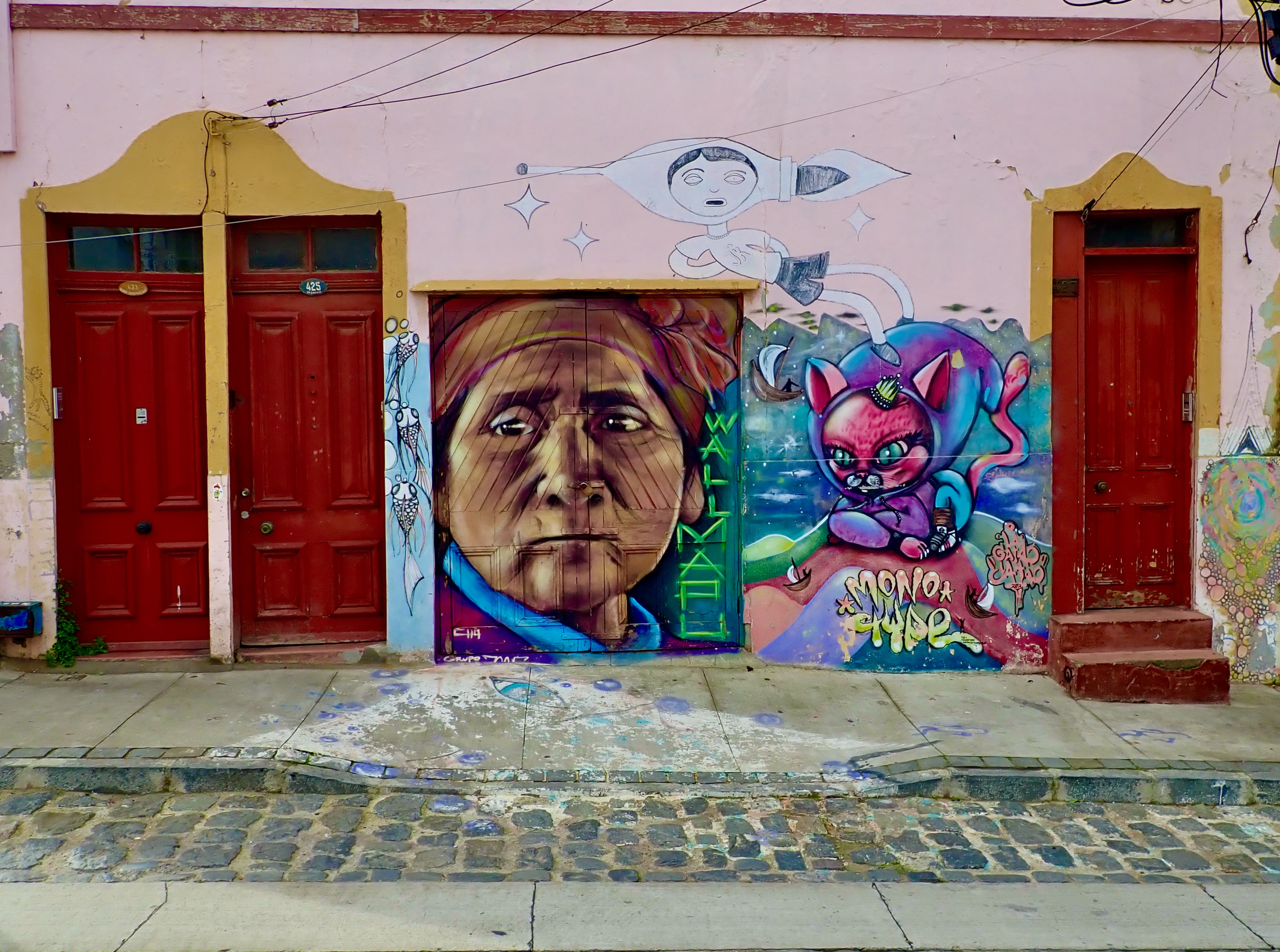
The artwork also pays homage to the city’s labor movements, historical milestones, and cultural celebrations. And as the art evolves over time and with potential removal or painting over, the fleeting nature of street art underscores the urgency behind the messages, reinforcing its role as a mirror to the city’s dynamic political and social landscape.
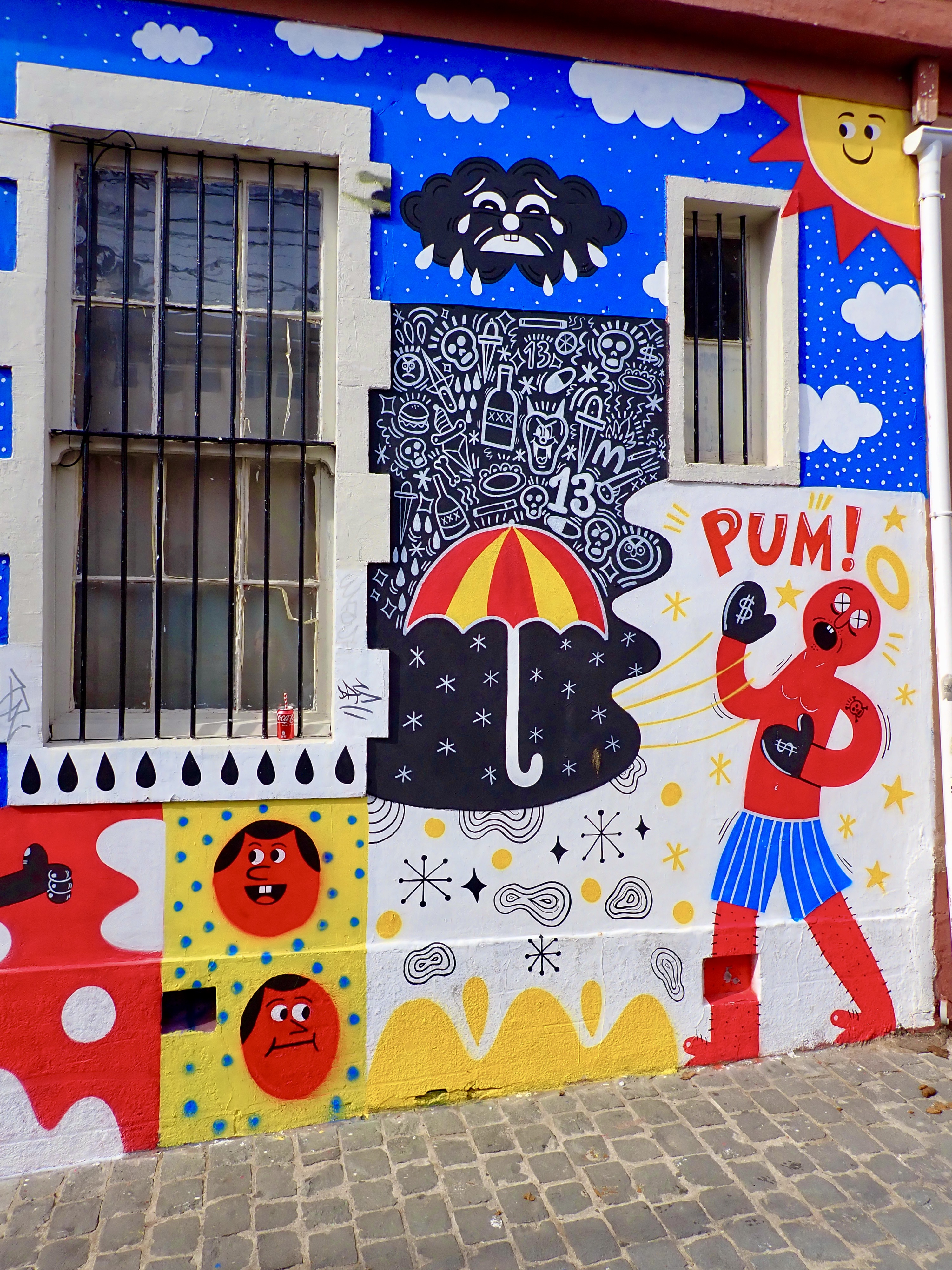
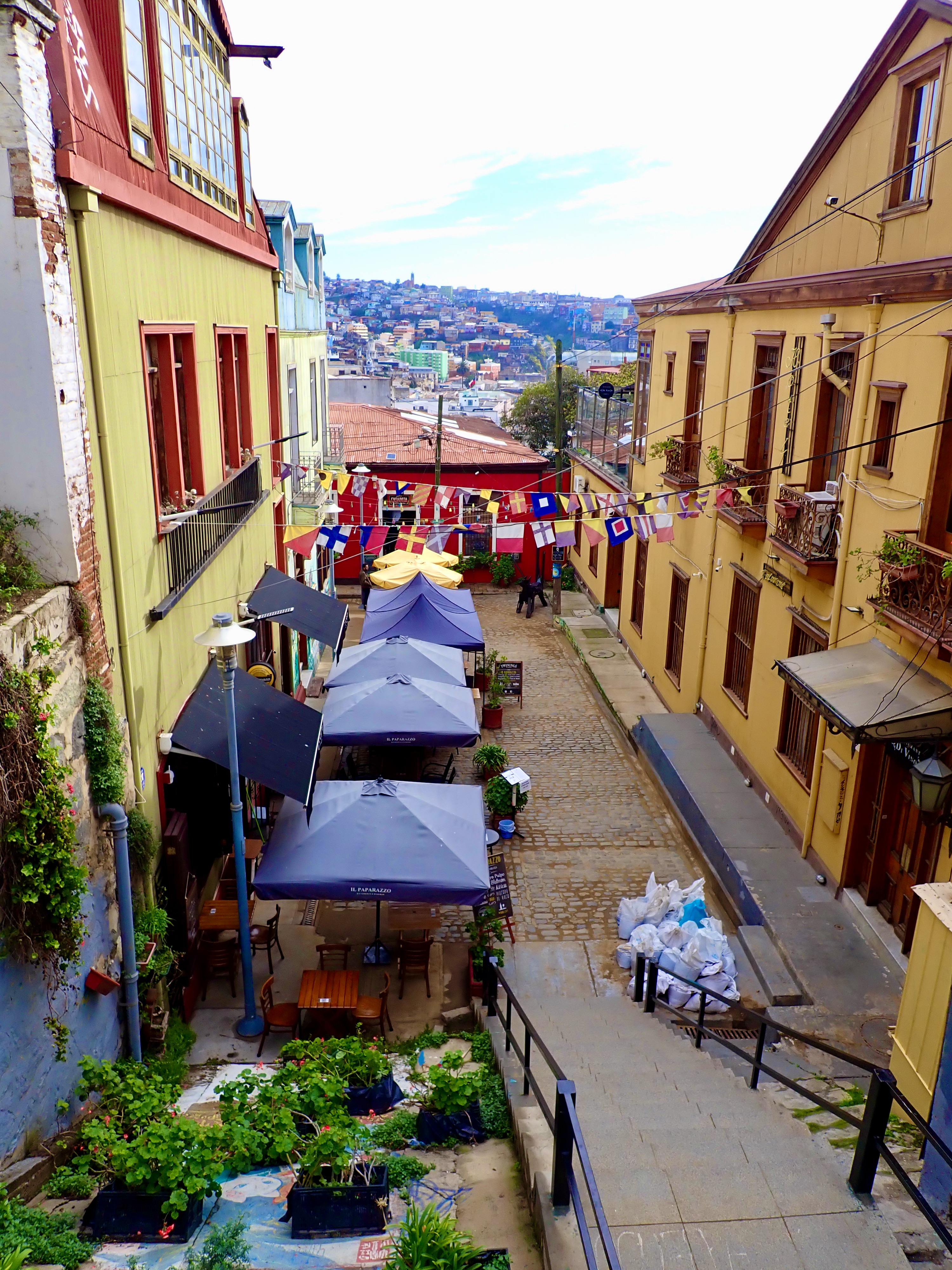
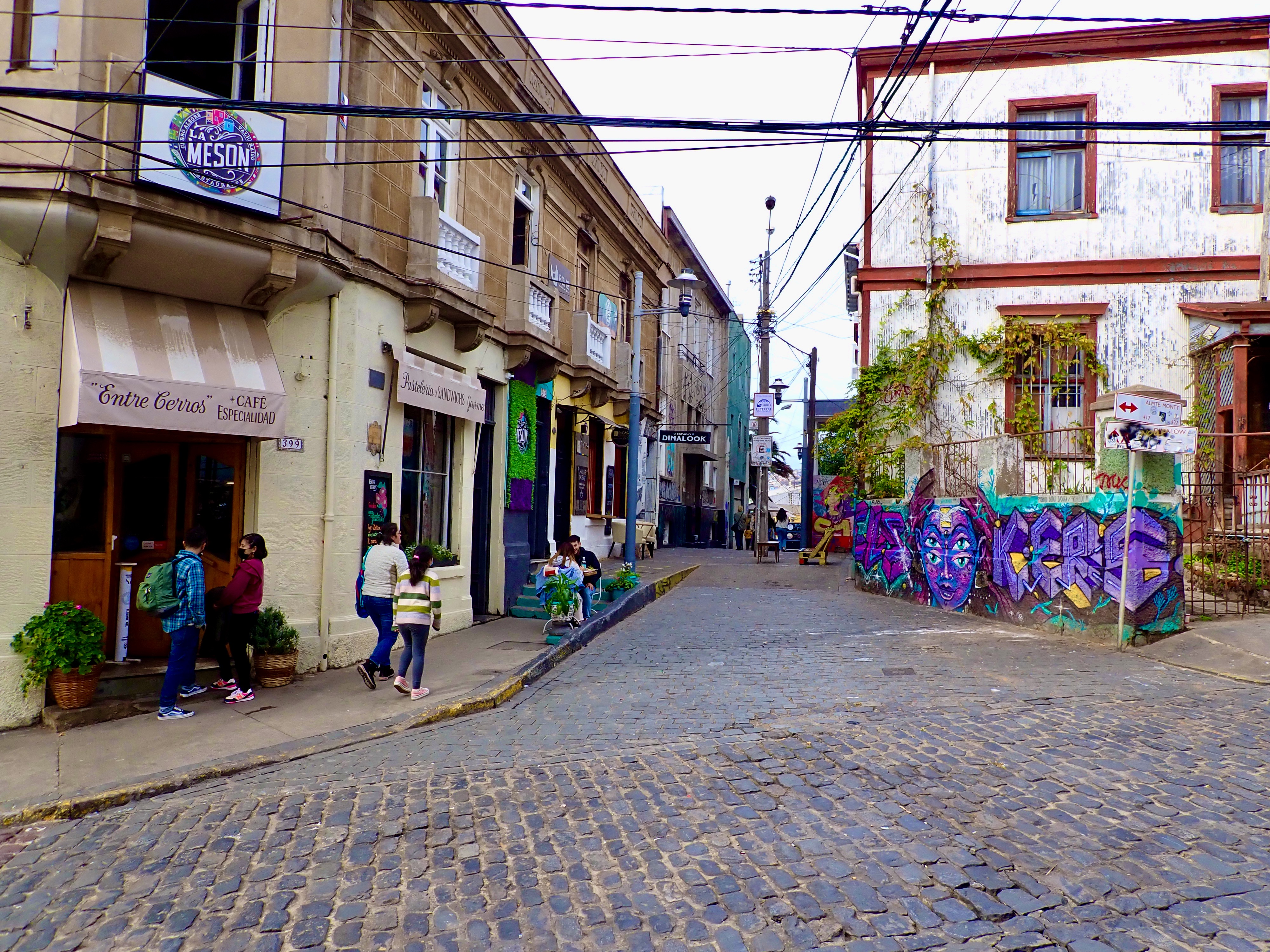
Around every corner there seemed to be a new photo opportunity for me, which Freddy obliged while also filling me in on the background where possible. As a result, it was a relaxed and easy morning of walking, despite the many hills and stairways. As noon approached, we walked by a restaurant with a long line of tourists like me. “They’re waiting for the restaurant to open – it has a great view of the harbour” Freddy said, “But I know a place with much better food, much better prices, and much less touristy just around the corner!”
The benefit of travelling with a local is that their on-the-ground knowledge will almost always beat what you will find in the guidebooks and online! That brought us to Cocina Puerto, a small family-owned restaurant, unassuming from the street and a basic interior, but great service and fantastic food. We were welcomed by the owner himself, who seated us near the front of the restaurant with a view of the bustling street. There were many cool, small details, like the table being made from an old door frame with windows in tact. The owner recommended the catch-of-the-day, which he said he picked up that morning from the fishermen at the dock – and it was delicious. It was a large portion but also very light, so a good choice for conquering the rest of our walking tour. We washed down our meal with a locally made Pinot Noir from the nearby Casablanca Valley, all for a small price.
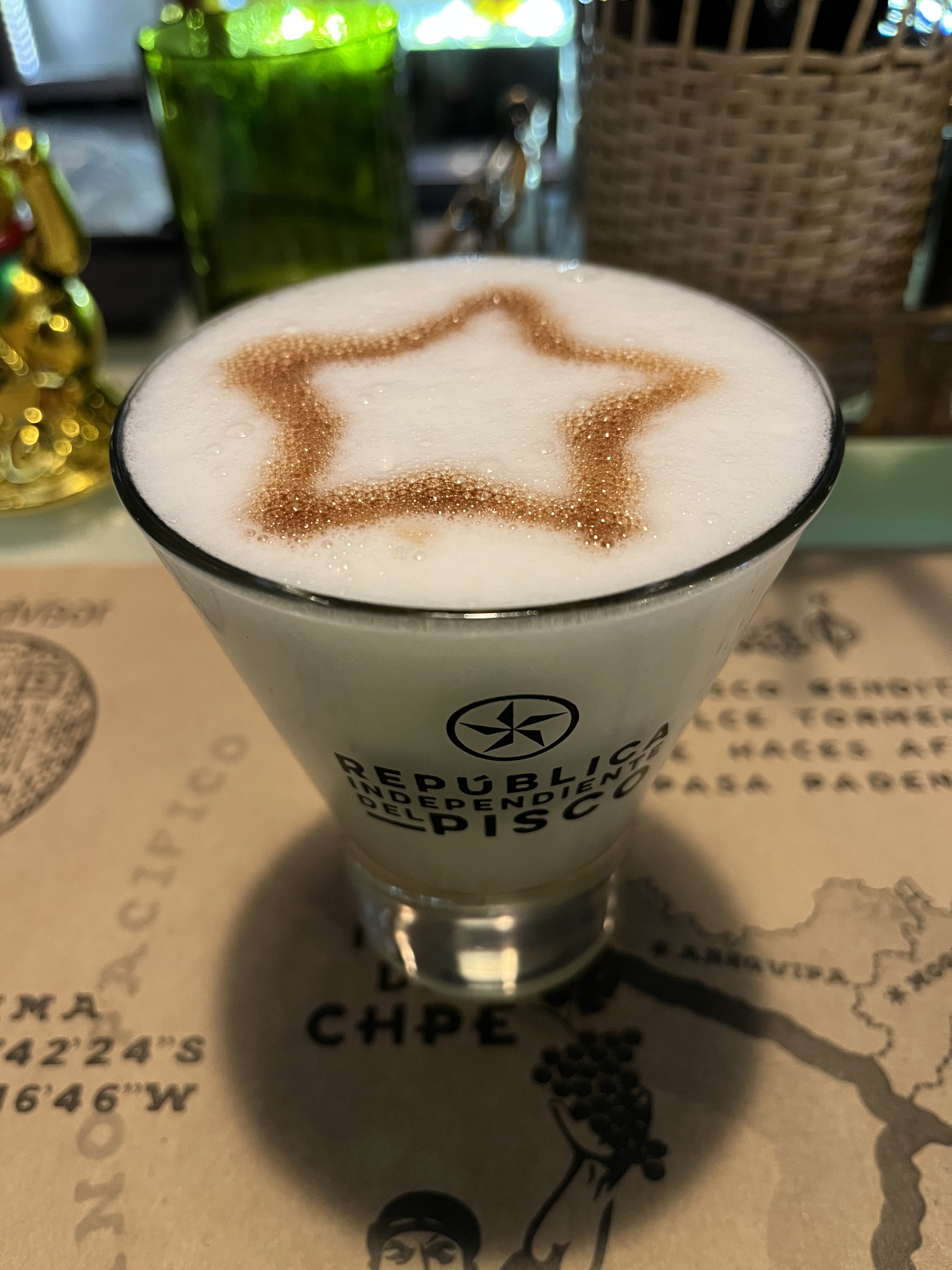
After lunch we had a quick talk with the owner, who was shocked that I had been in Chile for 6 days and had yet to try a Pisco Sour. Pisco is a brandy-like drink made from locally grown muscat grapes. The “sour” comes by mixing Pisco with citrus – usually lime – as well as some simple syrup, egg whites, and a dash of bitters. True to the Chilean hospitality I had been experiencing all week, a few minutes later I had a complimentary Pisco Sour in my hand. The conversation then turned to the ongoing war of words between Chile and Peru – who invented the Pisco Sour and claims it as their own? Naturally, with a Pisco Sour in my hand, I sided with Chile on this one!
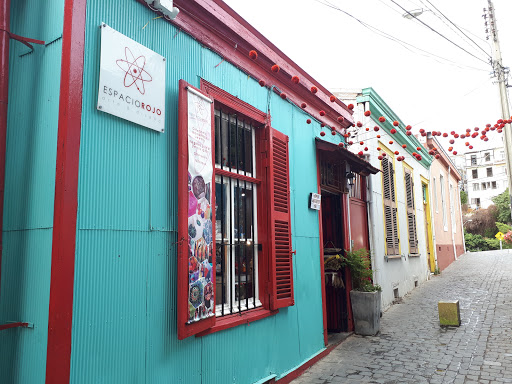
Rojo Galeria was next on our walking tour and was one of the many highlights of the day! The gallery is located on a narrow street, in a former house built in 1887 and renovated to accommodate the gallery. We were lucky enough to have a tour of the gallery with the owner himself, Christián Vega-Rojo, who purchased the building and spent a decade transforming it into the Rojo Galeria. The gallery has a diverse selection of local artwork on display and for sale, from well-established as well as emerging local artists. The gallery has been instrumental in helping young urban artists emerge into nationally known figures in the Chilean art community. And it is not only the art that is glorious – the back balconies of the house offer up spectacular views of the city.
We continued to make our way through the narrow and winding streets, down staircases, until we were back at our starting point, to begin the journey back to Santiago. Valparaíso is a wonderful city to visit and perhaps I should have stayed longer, but my day-long journey with Freddy and Pride Tours provided me with an appetite to return some day.
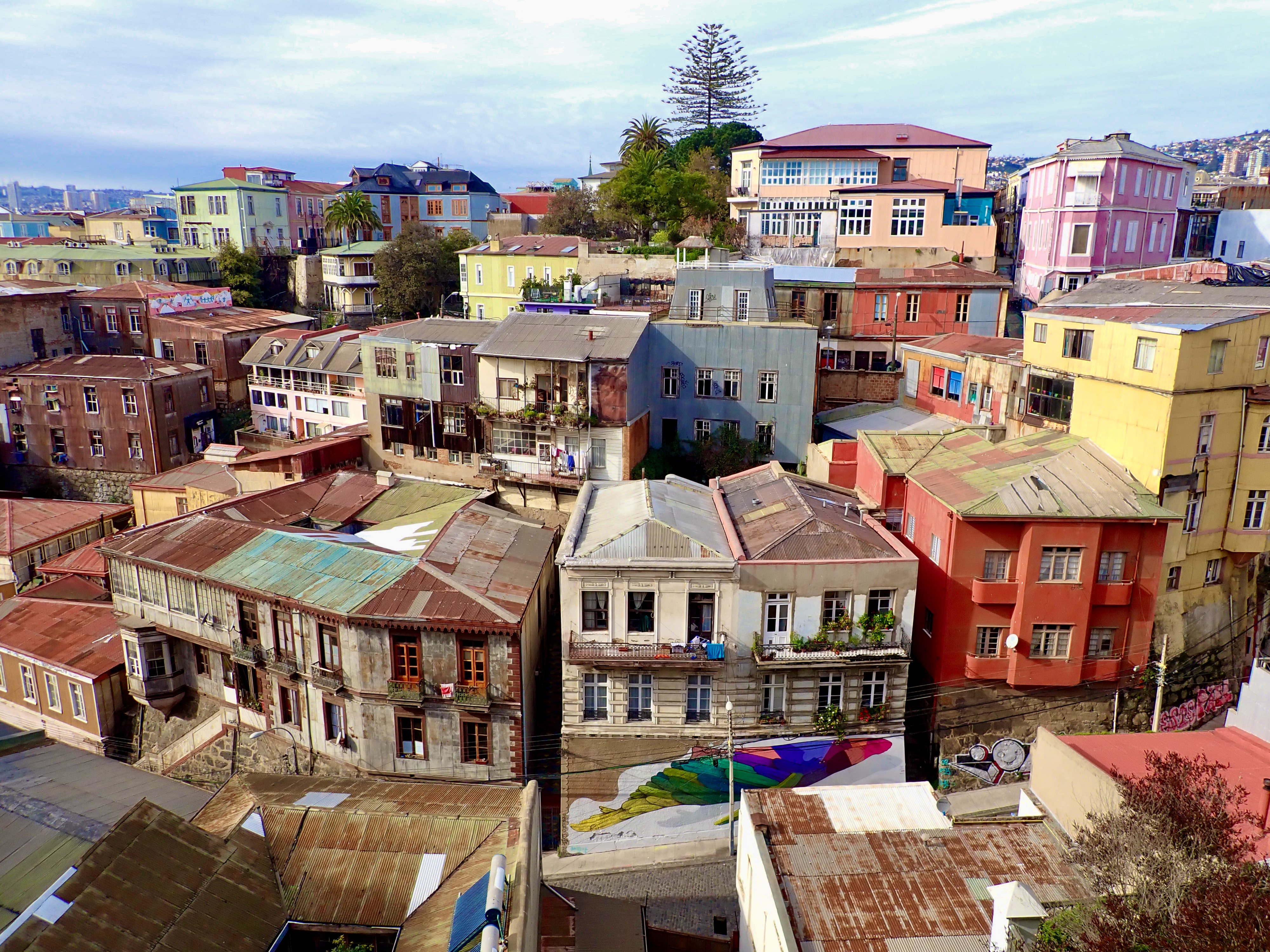
In a world where urban landscapes can blend into sameness, Valparaíso stands as a monument to individuality and the artistic spirit. This coastal city captures the essence of exploration, inviting you to get lovingly lost in its streets and experience the magic that resonates around every corner. It’s a dream city for any traveller to explore and discover.
 sologetaway.org
Leave a comment